1. Profundidad de detección principal
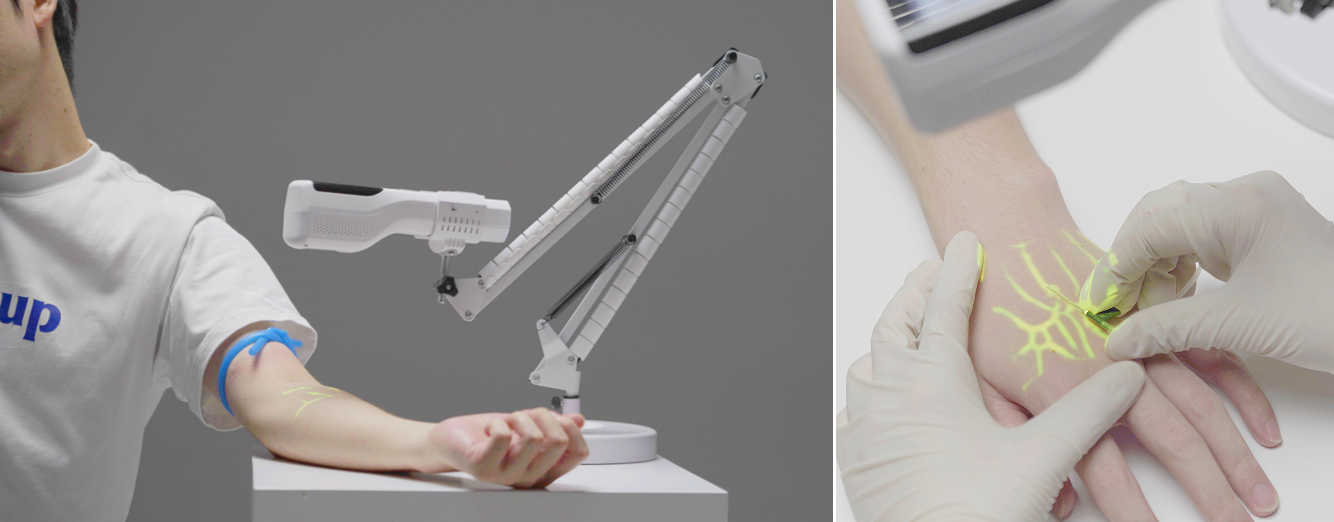
Profundidad general: la mayoría de los dispositivos pueden detectar venas de 0,2 a 1,0 cm debajo de la piel, pero el rango de imagen efectivo real generalmente se concentra en las venas más superficiales debajo de la piel (0,2 a 1,0 cm).
Mejor efecto: para las venas superficiales claramente visibles (como el dorso de la mano y el antebrazo), el efecto de imagen es el mejor.
2. Factores influyentes clave
Estado de la piel
El color de la piel, el grosor de la grasa, el edema o el tejido cicatricial pueden reducir la penetración
Los pacientes con obesidad o edema pueden tener una profundidad limitada.
Rendimiento del equipo
La longitud de onda de la fuente de luz (generalmente infrarroja cercana, aproximadamente de 750 a 980 nm) afecta la penetración en el tejido
El algoritmo de imágenes y la sensibilidad del sensor determinan la capacidad de restaurar detalles.
Características venosas:
Existen diferencias significativas en el diámetro de las venas, el grado de llenado de sangre y la profundidad
Es posible que las venas profundas (como la vena femoral en pacientes obesos) no se visualicen con claridad.
3. Limitaciones técnicas
Vasos sanguíneos profundos no penetrantes: No se pueden detectar arterias ni vasos sanguíneos viscerales, se utilizan principalmente para vasos sanguíneos superficiales
buscador de venas
localización (como infusión y extracción de sangre).
Auxiliar en lugar de sustituto: No puede reemplazar por completo las tecnologías de imágenes profundas como la ecografía
4. Escenarios de aplicación comunes
Pacientes con dificultad para la venopunción (niños, ancianos, obesos).
Pacientes con arteriosclerosis o venas ocultas causadas por infusión intravenosa a largo plazo o quimioterapia.
Ayudar a las enfermeras o médicos a aumentar la tasa de éxito de la punción.
¿Te interesa ser distribuidor? Contáctanos para consultar precios al por mayor.
También bienvenido a
contáctenos
, somos
ZD Medical Inc
.
Tel.: +86-187 9586 9515
Correo electrónico:
sales@zd-med.com
WhatsApp/Móvil: +86-187 9586 9515


 compatible con la red ipv6
 español
 English
 العربية


